
Blog
Tips & local guides

2026-10-06
How Much Does It Cost to Insulate a 40x60 Pole Barn in Tulsa?
Insulating a 40x60 pole barn in Tulsa with 2 inches of closed-cell spray foam typically costs about $10,000 to $20,000 for the walls and roof.

2026-10-06
What Is the Best Type of Insulation for a Pole Barn in Oklahoma?
For an existing metal pole barn in Oklahoma, closed-cell spray foam is usually the best insulation. Fiberglass blanket is the budget option during construction.

2026-10-06
Spray Foam vs Fiberglass for Pole Barns: Which Is Better in Tulsa?
Spray foam stops condensation and air leaks and works on existing barns. Fiberglass blanket costs less but only works well when installed during construction.
2026-10-06
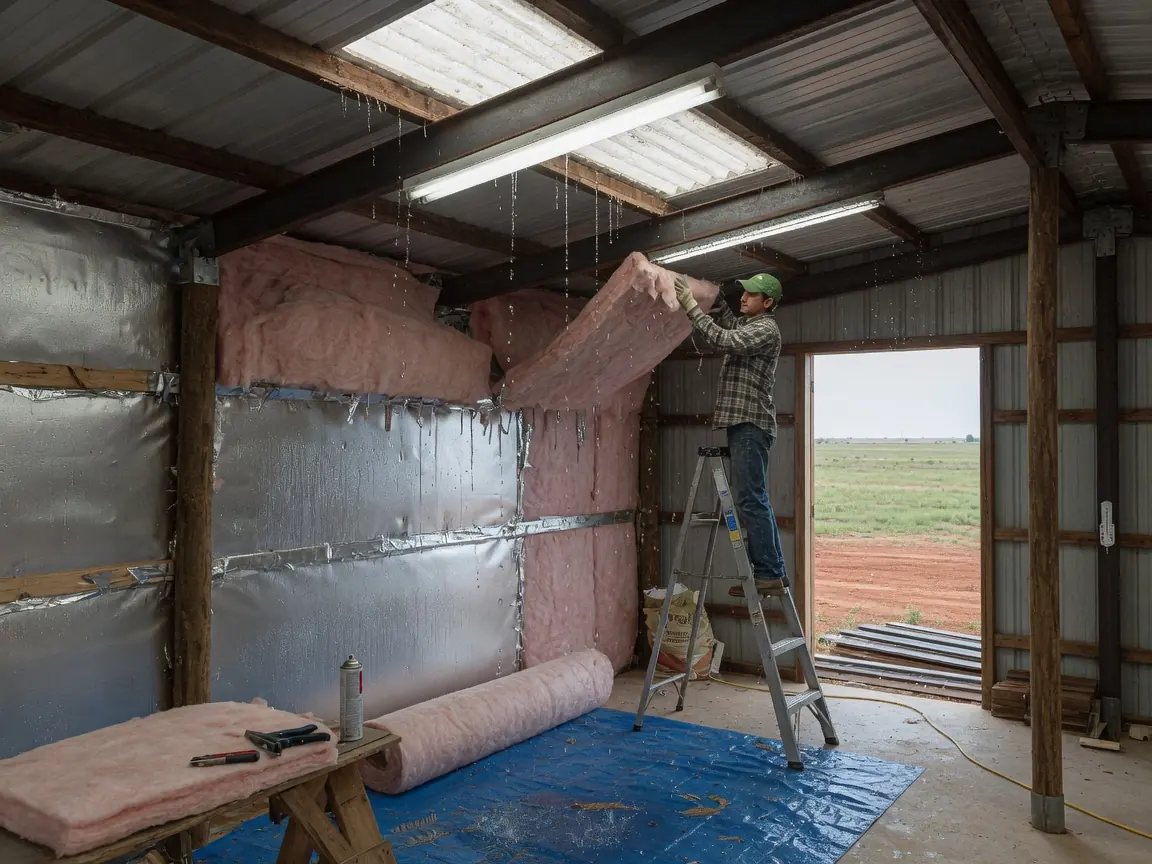
How to Stop Condensation Dripping in a Metal Pole Barn
To stop condensation dripping in a metal pole barn, keep moist air from reaching the cold metal. A closed-cell foam coat on the roof is the most reliable fix.

2026-10-06
Do You Need a Vapor Barrier in Pole Barn Walls?
With closed-cell spray foam, the foam is the vapor retarder. With fiberglass, the sealed facing is. Tyvek is not a vapor barrier.

2026-10-06
What R-Value Do Pole Barn Walls and Roofs Need in Oklahoma?
There is no single R-value for an unheated pole barn. Heated shops typically use about R-13 walls and R-13 to R-20 or more overhead.
2026-10-06
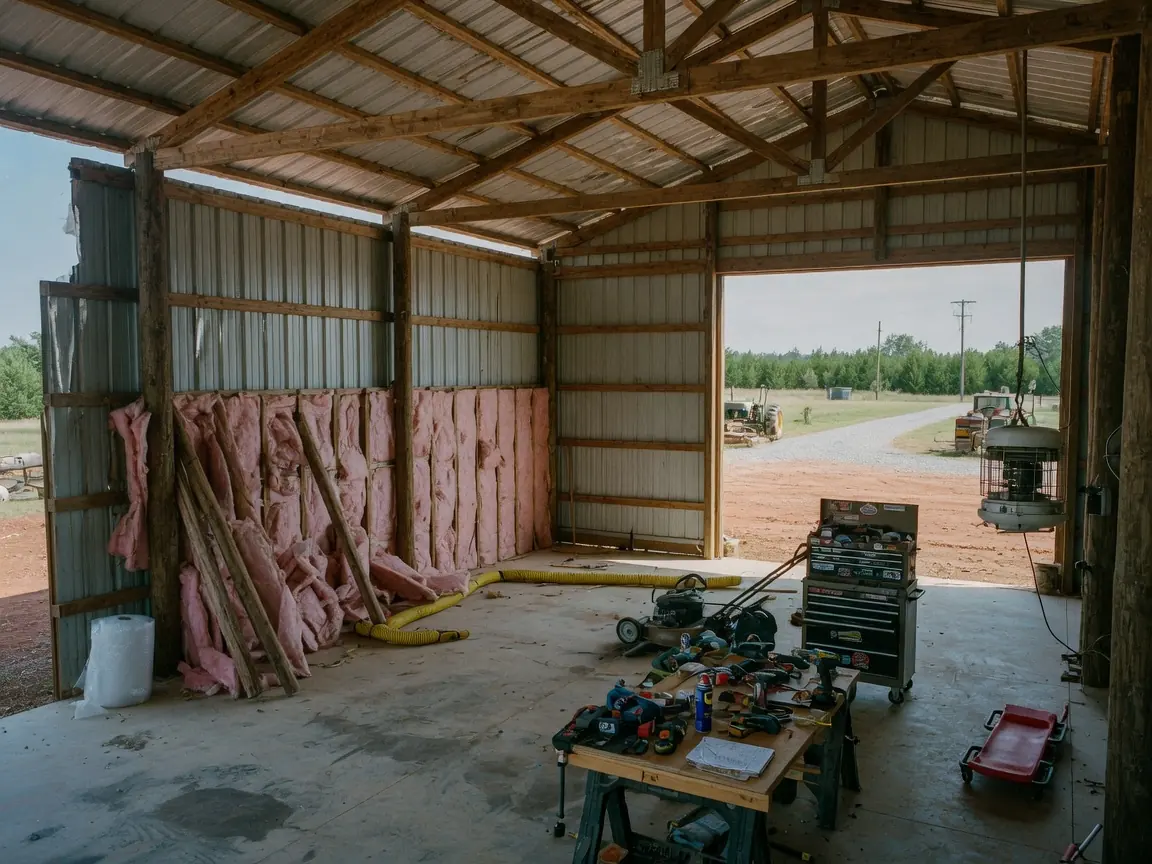
Is It Worth Insulating a Pole Barn You Only Use as a Shop?
Usually yes. Insulating a shop stops dripping and rust, makes it usable in summer and winter, and cuts the cost of heating it.

2026-10-06
How Much Does It Cost to Spray Foam a 30x40 Shop Near Tulsa?
Spray foaming a 30x40 shop near Tulsa with 2 inches of closed-cell foam on the walls and roof typically costs about $5,500 to $11,000.

2026-10-06
Can You Spray Foam Over Old Bubble Wrap or Blanket Insulation in a Pole Barn?
Usually not. Spray foam needs to bond to clean metal, so loose or torn bubble wrap and old blanket insulation are removed first.

2026-10-06
Do Mice Chew Through Spray Foam in Pole Barns and Barndominiums?
Mice can chew spray foam, but they rarely nest in cured closed-cell foam. Sealing entry gaps matters more than the insulation type.